
Brad Brenner, PhD, is a counseling psychologist and Director of the Therapy Group of DC. He co-founded the Therapy Group of Charlotte, WithTherapy, and The Capital Therapy Project, a community-based psychotherapy training institute. Dr. Brenner has been recognized by the American Psychological Association for outstanding achievements in Counseling Psychology.
Article2 min read
Why Are Depression Rates So High in the LGBTQ+ Community?
- Brad Brenner PhD
- Sarah HayesSkelton PhD
- David Pantalone PhD
- Lauren Latella PhD
- Jeffrey Cohen PsyD
- Colleen A Sloan PhD
- Oct 1, 2025
- 2

Whether you personally identify as LGBTQ+ or are looking to support a loved one who holds one or more of those identities, you’re likely no stranger to the devastating effects of mental health disorders. People who identify as lesbian, gay, bisexual, transgender, or queer are 1.5 to 2.5 times more likely to battle anxiety or depression during their lifetimes than their straight and gender-conforming peers.
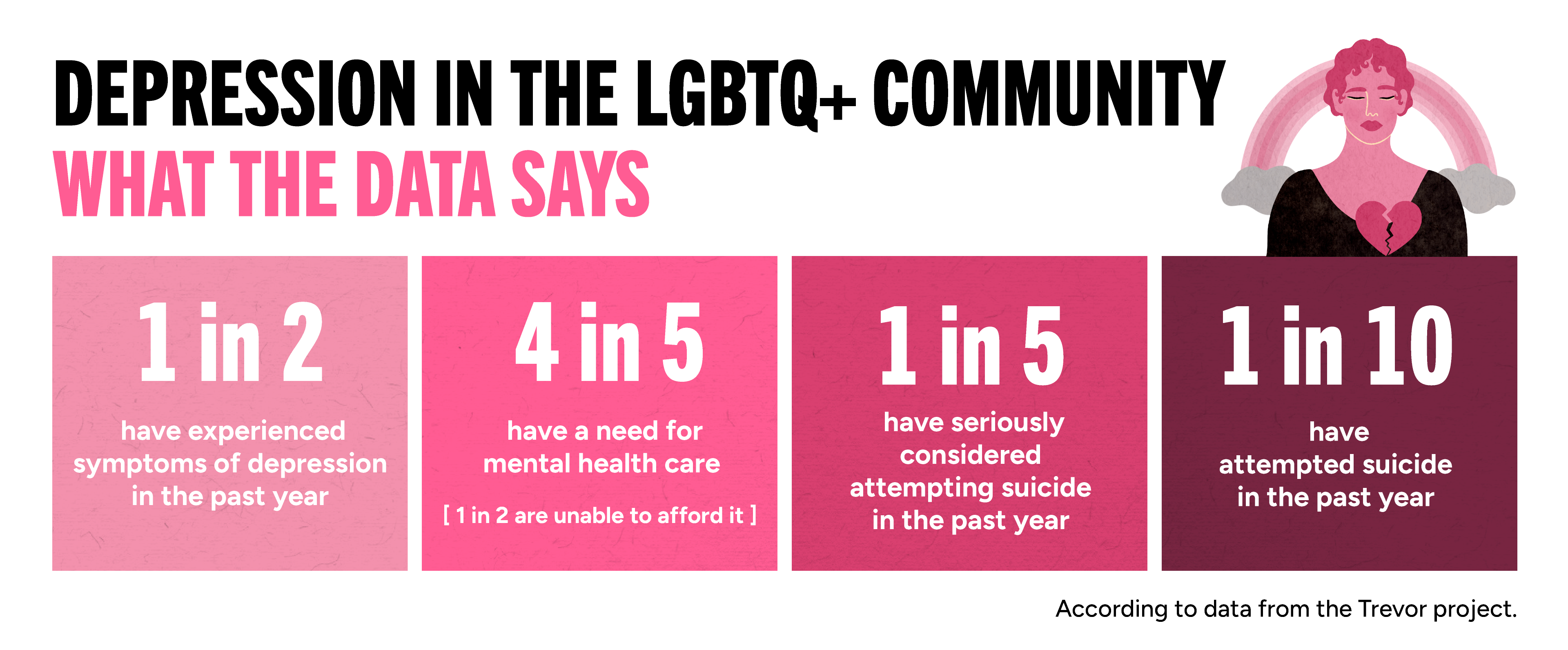
| Infographic: Depression in the LGBTQ+ Community: What the Data Says |
| According to data from The Trevor Project: 1 in 2 have experienced symptoms depression in the past year 4 in 5 have a need for mental health care Of those, 1 in 2 are unable to afford mental health care 1 in 5 have seriously considered attempting suicide in the past year 1 in 10 have attempted suicide in the past year |
Why Are Depression Rates So High Among LGBTQ+ Individuals?
A major part of identifying as LGBTQ+, whether you are “out” about that identity or not, is learning to read every situation to decide how much you can safely be yourself. This behavior doesn’t come from nowhere; it’s an adaptive skill that many people develop, after repeated exposure to prejudice and discrimination, to help them stay safe in a world that sometimes presents unsafe situations.
Being so hyper-aware of the world around you can eventually shape your inner world, too. It can affect the way you perceive yourself, making you feel unworthy, unlovable, or hopeless about the future. This phenomenon, referred to by psychologists as ‘minority stress,’ can have lasting effects on mental health and can become a lifelong risk factor for depression.
This is why it’s so important for members of LGBTQ+ communities to be proactive and seek mental health care if needed. Although finding and affording a qualified therapist isn’t always easy, there are many resources available to connect you with the right services.
Was this article helpful?

