
Dr. Cindy Aaronson joined ADAA in 2004 and was elected to the Board of Directors in 2013. She served as Board Secretary until 2016 and has been actively involved in ADAA in numerous ways, including co-chairing the 2020/21 conference. At the Icahn School of Medicine at Mount Sinai, she supervises and lectures to medical students on cognitive behavior therapy (CBT) techniques, which they use to treat uninsured residents of Harlem. In addition, she case supervises psychiatric residents as well as clinicians through a program for employees in CBT.
Article2 min read
How Do Women Experience Depression?
- Cindy J Aaronson PhD
- Susan K Gurley JD
- Oct 1, 2025
- 2

Like many other mental health disorders, depression is found at a much higher rate among women compared to men. In fact, women are thought to be up to three times more likely to experience depression in their lifetimes. They also tend to experience different symptoms, creating challenges when it comes to diagnosing and treating the disorder.
Why Are Women More Prone to Depression?
Differences in traditional gender roles and societal expectations are thought to be a main cause for the higher prevalence of depression among women. Women often feel pressure to excel in both their work and home lives; falling short of these perceived expectations can become a contributing factor to depressive disorders.
Women are also uniquely susceptible to experiencing depression related to pregnancy and childbirth. An estimated 10 to 15% of women who give birth will experience postpartum depression, and 70% of them will experience symptoms for at least one full year. Only one in three women diagnosed with postpartum depression have an existing depression diagnosis prior to becoming pregnant.
Infographic: 12 Signs of Depression Among Women
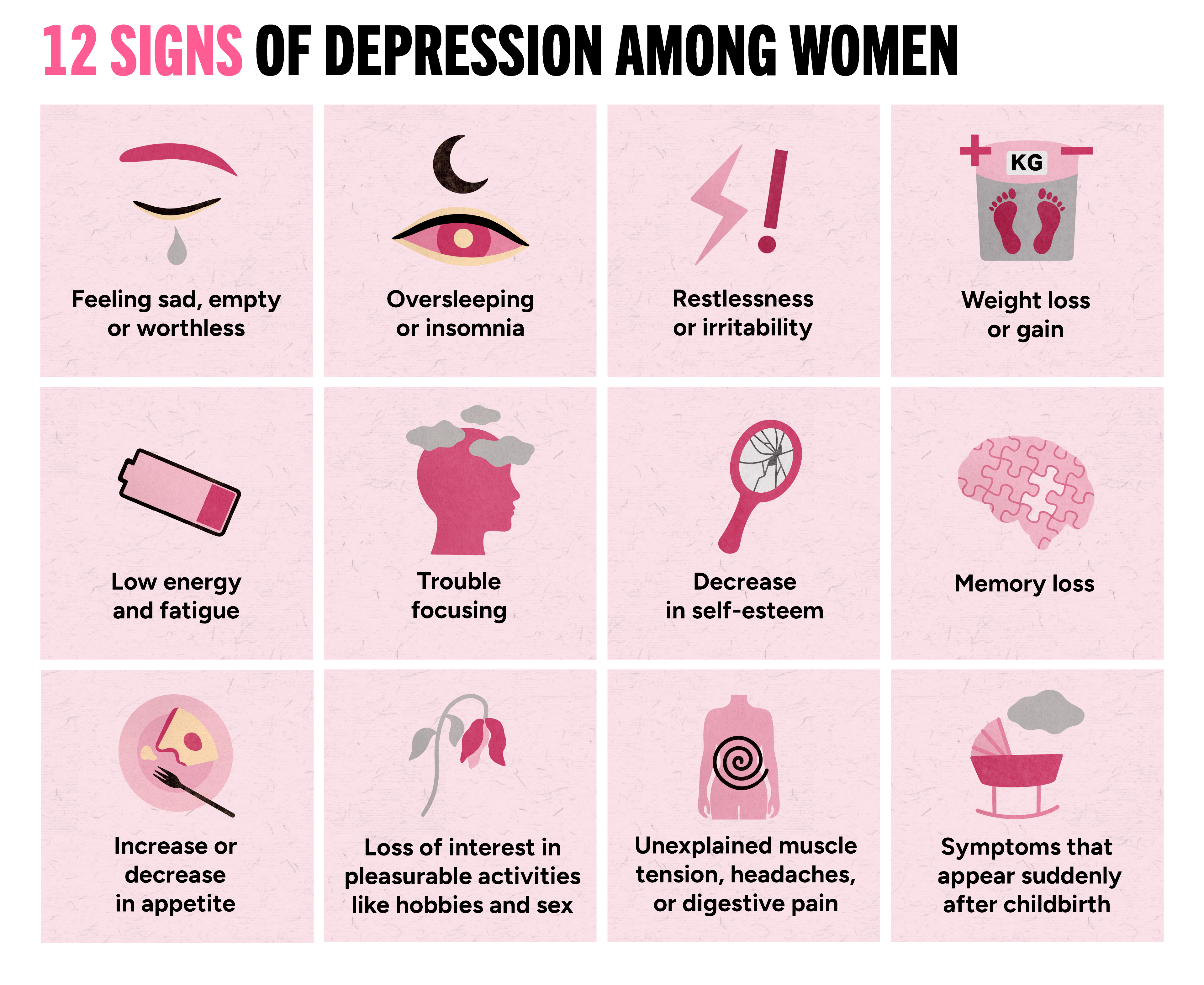
- Feeling sad, empty, or worthless
- Oversleeping or insomnia
- Increase or decrease in appetite
- Weight loss or gain
- Low energy and fatigue
- Loss of interest in pleasurable activities like hobbies and sex
- Decrease in self-esteem
- Restlessness or irritability
- Memory loss
- Trouble focusing
- Unexplained muscle tension, headaches, or digestive pain
- Symptoms that appear suddenly after childbirth
Was this article helpful?

